Marine Lines

About

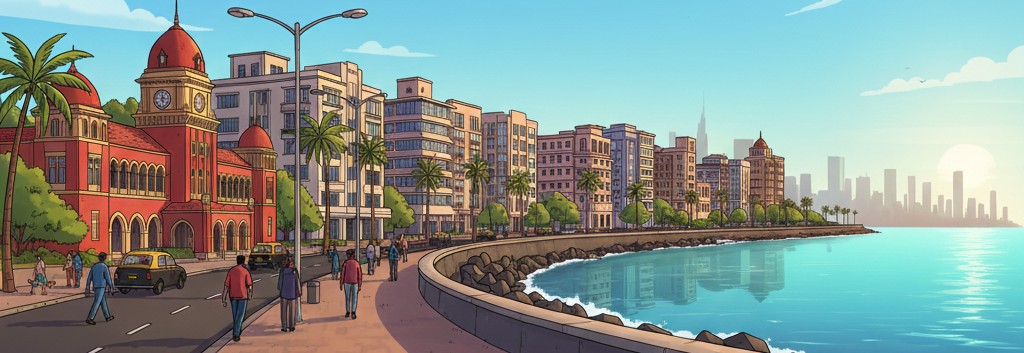
Marine Lines is a historic coastal neighbourhood and seafront promenade located in Mumbai, forming an integral part of the iconic Marine Drive along the Arabian Sea. The area developed during the early twentieth century as part of Bombay’s large-scale land reclamation projects and soon became a symbol of planned urban expansion. Marine Lines is widely known for its curved seaside road officially named Netaji Subhash Chandra Bose Road, its continuous pedestrian promenade, and its close association with the Queen’s Necklace night view.

The locality is surrounded by some of Mumbai’s finest Art Deco residential buildings constructed during the 1930s and 1940s, making it a significant urban heritage zone. Today, Marine Lines functions as a vibrant public space where residents and visitors gather for walking, jogging, relaxation, photography and enjoying uninterrupted views of the Arabian Sea. Its open access, central location and cultural importance have established Marine Lines as one of Mumbai’s most recognisable and frequently visited waterfront areas.

Key Highlights:

  • ๐ŸŒŠ Coastal promenade forming part of Marine Drive in Mumbai
  • ๐Ÿ—๏ธ Built on reclaimed land during the early twentieth century
  • ๐Ÿ›ฃ๏ธ Official road name is Netaji Subhash Chandra Bose Road
  • โœจ Internationally known for the Queen’s Necklace night view
  • ๐Ÿ›๏ธ Lined with prominent Art Deco residential buildings
  • ๐Ÿšถ Open-access public space with no entry fee
  • ๐Ÿ“ธ Popular for evening walks, jogging and photography

Marine Lines

How to Reach ๐ŸšŒ๐Ÿš‡

Marine Lines is centrally located in Mumbai and is easily accessible by train, metro, road and air. Its proximity to major transport hubs makes it convenient for both locals and tourists visiting the Marine Drive and Queen’s Necklace stretch.

  • โœˆ๏ธ By Air
    • Chhatrapati Shivaji Maharaj International Airport is approximately 22–24 km away
    • Travel time ranges from 45 to 90 minutes depending on traffic
    • Taxi or app-based cab fares usually range from โ‚น500 to โ‚น900

  • ๐Ÿš† By Train
    • Marine Lines Railway Station on the Western Line is the nearest station
    • Churchgate Station is also within walking distance
    • Local train fares range from โ‚น5 to โ‚น20 for short-distance travel
    • The promenade is accessible on foot or by short taxi ride

  • ๐Ÿš‡ By Metro
    • Nearest operational metro connectivity is via Andheri corridors
    • Further travel by taxi or local train is required
    • Future metro expansions are expected to improve access

  • ๐Ÿ›ฃ๏ธ By Road
    • Connected via Netaji Subhash Chandra Bose Road
    • BEST buses, taxis and app-based cabs are easily available
    • Bus fares generally range from โ‚น5 to โ‚น25
    • Paid parking is limited and often crowded

  • ๐Ÿšถ Additional Tips
    • Walking is the best way to explore the promenade
    • Avoid peak office hours and weekend evenings for smoother travel


Food Options / Food Courts Nearby ๐Ÿฝ๏ธ

Marine Lines is surrounded by a wide range of food options that reflect Mumbai’s diverse culinary culture. From street-side snacks to long-established cafés and casual dining spots, visitors can find meals across all budgets within walking distance of the promenade.

  • ๐ŸŒฎ Street Food & Quick Bites
    • Food stalls near Girgaon Chowpatty and adjoining lanes
    • Snacks include pav bhaji, bhel puri, sev puri, vada pav and roasted corn
    • Prices generally range from โ‚น30 to โ‚น120 per item

  • โ˜• Cafés & Casual Dining
    • Irani cafés and modern coffee shops in Marine Lines and Churchgate
    • Serve tea, coffee, sandwiches, buns, omelettes and light meals
    • Average spending ranges from โ‚น150 to โ‚น400 per person

  • ๐Ÿ› Restaurants & Eateries
    • South Indian, North Indian, Maharashtrian, Chinese and Continental options
    • Family-run restaurants offering thalis and combo meals
    • Meal costs usually range from โ‚น250 to โ‚น700 per person

  • ๐Ÿฅ—๐Ÿ— Veg / Non-Veg Options
    • Vegetarian food is widely available
    • Non-vegetarian options include seafood, chicken and egg-based dishes
    • Pure vegetarian eateries are common near Girgaon and Kalbadevi

  • โญ Must-Try Local Dishes
    • Pav bhaji
    • Bhel puri and sev puri
    • South Indian dosa and idli
    • Irani café bun maska with chai
History & Land Reclamation ๐Ÿ•ฐ๏ธ

Marine Lines owes its existence to Mumbai’s ambitious coastal reclamation projects carried out during the early twentieth century. Before development, this stretch consisted of shallow coastal waters along the Arabian Sea. As Bombay expanded rapidly under colonial administration, large-scale land reclamation was undertaken to create new roads, residential zones and public spaces.

The construction of the curved seaside boulevard during the 1920s and 1930s marked a major phase in the city’s urban transformation. Officially named Netaji Subhash Chandra Bose Road in later years, the Marine Drive and Marine Lines stretch became a defining symbol of planned coastal development.

The surrounding neighbourhood gradually evolved into a prestigious residential area dominated by Art Deco buildings constructed between the 1930s and 1940s. Over time, Marine Lines emerged not just as a traffic corridor, but as a public promenade reflecting Mumbai’s modern identity, openness and connection with the sea.

Key Historical Highlights : 

  • ๐ŸŒŠ Coastal area reclaimed from the Arabian Sea
  • ๐Ÿ—๏ธ Major development during the 1920s–1930s
  • ๐Ÿ›๏ธ Part of colonial-era expansion of Bombay
  • ๐Ÿ›ฃ๏ธ Road later named Netaji Subhash Chandra Bose Road
  • ๐Ÿ  Art Deco precinct developed in the 1930s–1940s
  • ๐ŸŒ† Established Marine Lines as a landmark public waterfront


Architecture & Art Deco Heritage ๐Ÿ›๏ธ

Marine Lines is internationally recognised for its distinctive coastal architecture and its association with Mumbai’s celebrated Art Deco heritage. The curved boulevard and adjoining residential blocks were largely developed between the 1930s and 1940s, a period when Art Deco emerged as a dominant architectural style in Bombay.

Buildings along the Marine Lines and Marine Drive stretch feature clean horizontal lines, rounded balconies, porthole-style windows and geometric motifs typical of Art Deco design. The uniform height and curved alignment of these structures complement the natural sweep of the coastline, creating a visually cohesive skyline.

This precinct forms part of the larger Victorian and Art Deco Ensemble of Mumbai, which has received global recognition for its urban design value. Together, the road layout, promenade and surrounding buildings make Marine Lines a textbook example of modernist architecture adapted to a tropical coastal city.

Architectural Highlights

  • ๐Ÿ›๏ธ Developed mainly during the 1930s–1940s
  • โœจ Strong influence of Art Deco architectural style
  • ๐Ÿข Rounded balconies and streamlined building forms
  • ๐Ÿ“ Geometric patterns with horizontal emphasis
  • ๐ŸŒŠ Uniform building heights along the curved coastline
  • ๐Ÿ† Part of Mumbai’s recognised Art Deco heritage zone
Queenโ€™s Necklace โ€“ Night View โœจ

The Queen’s Necklace is the most iconic visual identity associated with Marine Lines and the Marine Drive stretch. This name refers to the breathtaking night-time view created when the streetlights along the curved coastal road illuminate after sunset. Seen from elevated points or aerial viewpoints, the continuous row of lights resembles a glowing necklace laid gently along the edge of the Arabian Sea.

The effect becomes most striking after dusk, especially on clear evenings when the lights reflect subtly against the dark sea and skyline. The Queen’s Necklace has become a defining symbol of Mumbai’s romance, resilience and urban beauty. It attracts photographers, evening walkers and visitors who gather along the promenade to experience the city’s calm transformation after sunset.

This nightly spectacle has been immortalised in Indian cinema, travel literature and postcards, reinforcing Marine Lines as one of Mumbai’s most photographed locations.

Highlights of the Queen’s Necklace View

  • โœจ Visible after sunset when streetlights are switched on
  • ๐Ÿ“ Best experienced from elevated viewpoints and the promenade
  • ๐Ÿ’ก Continuous curve of lights resembles a glowing necklace
  • ๐ŸŒŠ Reflections enhance the view on clear nights
  • ๐Ÿ“ธ Popular for photography and evening walks
  • ๐ŸŽฌ Strong cultural and cinematic association with Mumbai


Visitor Experience & Atmosphere ๐Ÿšถ๐ŸŒŠ

Marine Lines offers a relaxed yet vibrant visitor experience shaped by its open seaside setting and central South Mumbai location. Throughout the day, the promenade serves as a quiet space for morning walks, jogging and enjoying fresh sea air. As evening approaches, the atmosphere gradually becomes livelier, with families, couples, photographers and tourists gathering along the parapet to watch the sunset and the Queen’s Necklace lights come alive.

The constant sea breeze provides relief from the city’s heat, while the rhythmic sound of waves adds to the calming environment. Weekends and public holidays tend to be crowded, especially after sunset, but the promenade remains orderly and welcoming.

With no entry restrictions, Marine Lines allows visitors to experience Mumbai’s public life at its most authentic, making it equally appealing for short visits, long walks and quiet moments by the sea.

What Visitors Commonly Experience

  • ๐Ÿšถ Calm mornings ideal for walking and jogging
  • ๐ŸŒฌ๏ธ Breezy evenings with strong sea winds
  • ๐ŸŒ… Sunset views followed by the Queen’s Necklace night scene
  • ๐Ÿ‘จ‍๐Ÿ‘ฉ‍๐Ÿ‘ง‍๐Ÿ‘ฆ Lively yet safe public atmosphere
  • ๐Ÿ“… Increased crowds during weekends and holidays
  • ๐Ÿ“ธ Popular spot for relaxation and photography


Best Time to Visit ๐ŸŒ…

Marine Lines can be visited throughout the year, but the experience varies with season and time of day. The most pleasant period is from October to March, when Mumbai experiences relatively cooler and less humid weather.

Evenings are considered the best time to visit, as visitors can enjoy sunset views followed by the illumination of the Queen’s Necklace lights. Early mornings are ideal for those seeking a quieter atmosphere, jogging or peaceful walks with fresh sea air.

During the June to September monsoon, the sea appears dramatic, but heavy rains and strong winds may reduce comfort. Summer afternoons are hot and humid and are best avoided.

Best Time Recommendations

  • ๐ŸŒค๏ธ Best months: October to March
  • ๐ŸŒ… Best time of day: Evening hours
  • ๐ŸŒ„ Early mornings for calm walks and jogging
  • ๐ŸŒง๏ธ Monsoon offers scenic views with caution
  • โ˜€๏ธ Avoid hot and humid summer afternoons
Photography & Viewpoints ๐Ÿ“ธ๐ŸŒ†

Marine Lines is one of Mumbai’s most photographed locations due to its sweeping coastal curve, Art Deco skyline and iconic night lighting. The promenade offers uninterrupted views of the Arabian Sea, making it ideal for wide-angle coastal shots and sunset photography.

Evening hours are especially popular, as photographers capture the transition from golden sunset hues to the glowing Queen’s Necklace lights. Elevated points near the southern end provide broader perspectives of the curved road and skyline.

The Art Deco buildings lining Marine Lines add architectural depth to daytime photographs, while night shots highlight reflections, light trails and city energy.

Best Photography Spots

  • ๐Ÿ“ธ Promenade seating along the Marine Lines stretch
  • ๐ŸŒ† Viewpoints overlooking the curved Marine Drive road
  • ๐Ÿ“ Southern-end viewpoints towards Nariman Point
  • ๐Ÿ›๏ธ Art Deco building facades during daylight
  • โœจ Night shots capturing the Queen’s Necklace


Safety, Crowd & Local Tips โš ๏ธ๐Ÿ‘ฅ

Marine Lines is generally considered a safe and well-maintained public space due to its central location in South Mumbai and regular police presence. The promenade is well lit in the evenings and attracts families, walkers and tourists, creating a secure atmosphere. Crowd levels increase on weekends, public holidays and during festivals, especially after sunset.

Visitors should remain within designated promenade areas and avoid sitting close to the edge during high tides or rough sea conditions. Personal belongings must be kept secure in crowded areas. Comfortable footwear, light jackets for breezy evenings and carrying drinking water are recommended. Respecting local rules and public etiquette ensures a pleasant visit.

Safety & Local Tips

  • โš ๏ธ Generally safe with regular police patrols
  • ๐Ÿ’ก Well-lit promenade during evenings
  • ๐Ÿ‘ฅ Heavy crowds on weekends and holidays
  • ๐ŸŒŠ Avoid sitting near the edge during high tide
  • ๐ŸŽ’ Keep valuables secure in crowded areas
  • ๐Ÿ‘Ÿ Wear comfortable footwear
  • ๐Ÿงฅ Carry light layers for sea breeze


Places Nearby Marine Lines
Frequently Asked Questions
Q1: What is Marine Lines in Mumbai famous for?
A1: Marine Lines in Mumbai is famous for its scenic seaside promenade, the iconic Queenโ€™s Necklace night view, and its location along the curved Marine Drive facing the Arabian Sea.
Q2: Where is Marine Lines located in Mumbai?
A2: Marine Lines is located in South Mumbai along Netaji Subhash Chandra Bose Road, forming part of the Marine Drive coastal stretch between Girgaon Chowpatty and Churchgate.
Q3: Why is Marine Lines called the Queenโ€™s Necklace?
A3: Marine Lines is associated with the Queenโ€™s Necklace because the streetlights along the curved coastal road resemble a glowing necklace when viewed at night from elevated points.
Q4: Is Marine Lines open to the public?
A4: Yes, Marine Lines is an open-access public promenade with no entry fee and can be visited freely throughout the day and evening.
Q5: What is the best time to visit Marine Lines?
A5: The best time to visit Marine Lines is during the evening hours for sunset views and the Queenโ€™s Necklace lights, while early mornings are ideal for peaceful walks and jogging.
Q6: How long is the Marine Lines promenade?
A6: The Marine Lines stretch forms part of the Marine Drive promenade, which is approximately 3 to 3.6 kilometres long along the Arabian Sea.
Q7: Which railway station is nearest to Marine Lines?
A7: Marine Lines Railway Station on the Western Line is the nearest station, with Churchgate station also located within walking distance.
Q8: Is Marine Lines safe for visitors at night?
A8: Marine Lines is generally considered safe at night due to good lighting, regular police presence and continuous public activity, though visitors should remain cautious in crowded areas.
Q9: Are there food options near Marine Lines?
A9: Yes, Marine Lines has numerous food options nearby, including street food at Girgaon Chowpatty, Irani cafรฉs, casual eateries and restaurants serving a variety of cuisines.
Q10: Is Marine Lines suitable for families and children?
A10: Marine Lines is suitable for families and children, offering an open promenade, sea views and a lively yet safe public environment, especially during evenings.
Q11: Can visitors sit and relax at Marine Lines?
A11: Yes, visitors can sit along the parapet and promenade seating at Marine Lines to relax, enjoy the sea breeze and watch sunset or night views.
Q12: Is photography allowed at Marine Lines?
A12: Photography is allowed at Marine Lines, and the area is popular for sunset shots, night photography of the Queenโ€™s Necklace and architectural images.
Q13: What kind of buildings are seen around Marine Lines?
A13: Marine Lines is lined with prominent Art Deco residential buildings constructed mainly during the 1930s and 1940s, forming a major heritage precinct of Mumbai.
Q14: Is Marine Lines crowded on weekends?
A14: Yes, Marine Lines becomes crowded on weekends, public holidays and festival evenings, especially after sunset.
Q15: Is Marine Lines worth visiting for first-time visitors to Mumbai?
A15: Yes, Marine Lines is a must-visit for first-time visitors as it showcases Mumbaiโ€™s coastal beauty, public life, heritage architecture and iconic night skyline.